Short answer: PVB is the standard interlayer for most laminated glass: clear, good at reducing noise and blocking UV. EVA resists moisture better at the edges and can hold decorative inserts, so it suits bathrooms and decorative interior glass. SGP (ionoplast) is much stronger and stiffer and keeps a barrier even after the glass breaks, so it is the premium choice for frameless balustrades, glass floors and canopies.
What does the interlayer do?
Laminated glass is two or more glass sheets bonded with a plastic interlayer. The interlayer holds the glass fragments together when the pane breaks, so the glass stays in its frame. It also changes how the glass performs every day: how strong and stiff it is, how much sound and UV it blocks, and how it behaves in humid places.
The main interlayers compared
| Interlayer | Strengths | Watch-outs | Best for |
|---|---|---|---|
| PVB (polyvinyl butyral) | High clarity, good sound insulation, blocks most UV, widely available | Edges should be protected from long-term moisture | Windows, shopfronts, skylights, most handrails |
| Acoustic PVB | Special damping layer for much better sound insulation | Chosen for noise, not strength | Meeting rooms, bedrooms on busy roads |
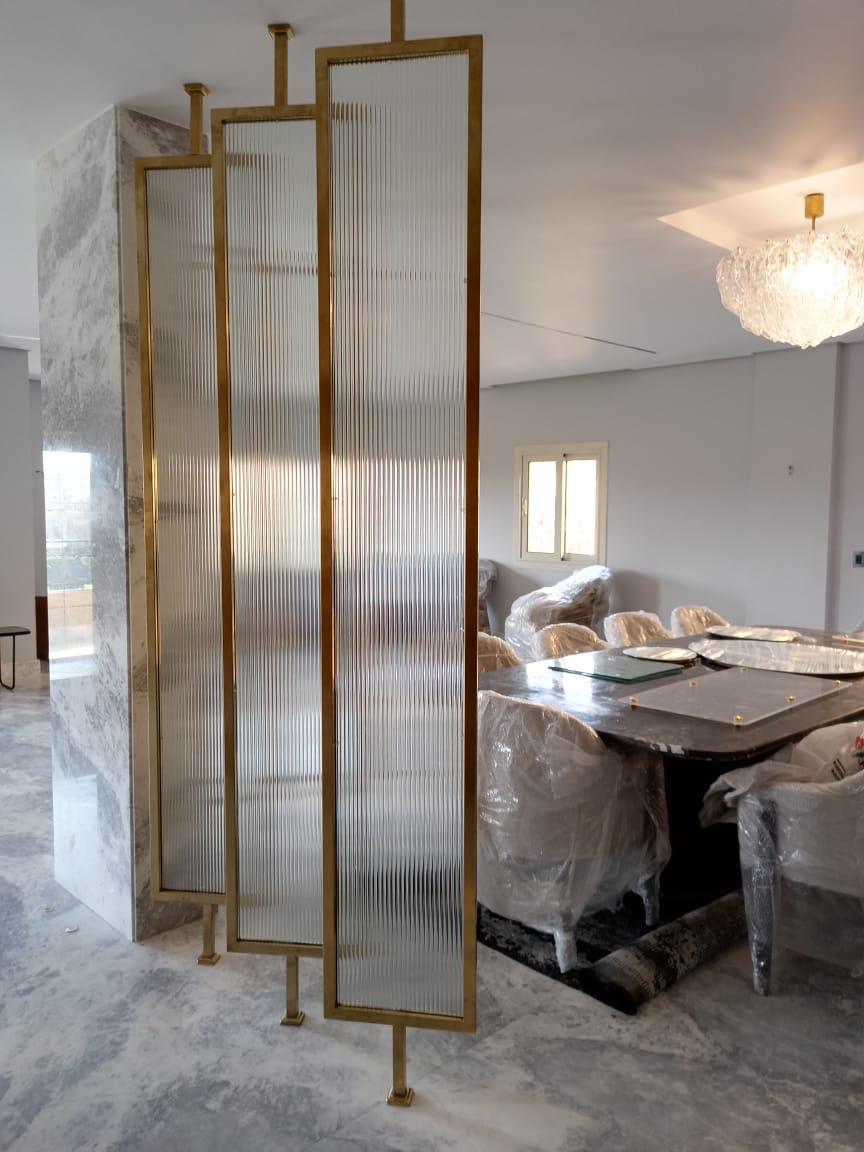
| Coloured / translucent PVB | Tints, white and frosted looks for privacy and design | Colour is part of the glass, so plan it early | Partitions, facades, feature walls |
| EVA (ethylene vinyl acetate) | Good moisture resistance at exposed edges; can embed fabric, mesh or decorative inserts | Lower tear resistance than PVB; not the choice for critical structural safety | Shower screens, bathrooms, decorative interior glass |
| SGP (ionoplast) | Much stronger and stiffer than PVB; keeps a residual barrier after breakage; allows thinner, lighter glass | Premium cost | Frameless balustrades, glass floors, canopies, structural glass |
| TPU (thermoplastic polyurethane) | Bonds glass to polycarbonate for very high impact resistance | Specialist product | Security and bullet-resistant glazing |
Why SGP matters for frameless balustrades
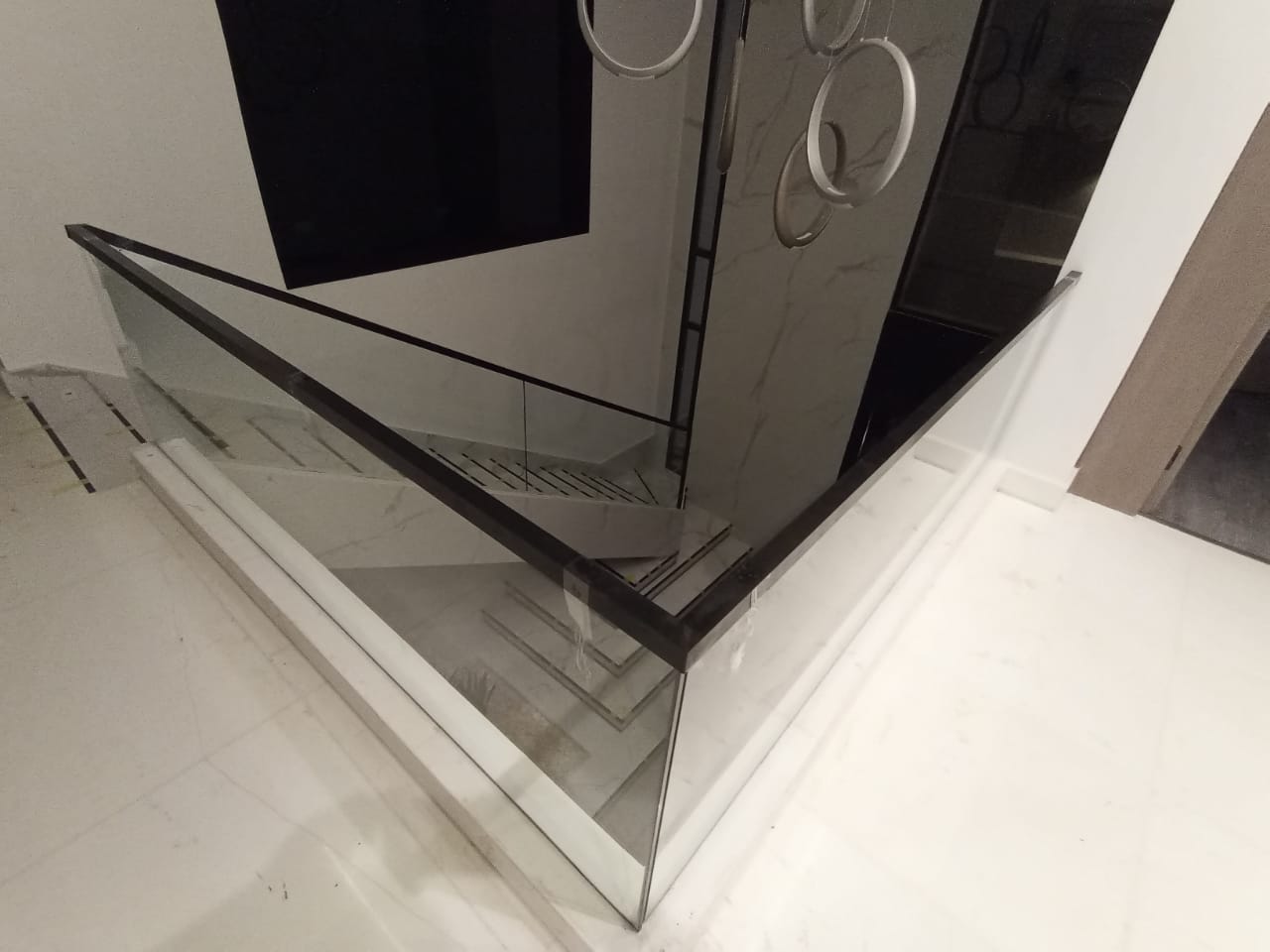
When both sheets of a PVB laminate break, the soft interlayer can sag like a blanket. An SGP laminate stays much stiffer, so a broken balustrade keeps standing as a barrier until it is replaced. For frameless glass balustrades with no top rail, on balconies and stair voids, SGP gives the highest level of post-breakage safety.
Reading a laminated glass specification
Laminated glass is usually described by its glass sheets and interlayer. For example:
- 6 + 6 mm with 1.52 mm PVB: two 6 mm sheets with a 1.52 mm interlayer, about 13.5 mm in total.
- 8 + 8 mm with 1.52 mm SGP: two 8 mm sheets with a stiff ionoplast interlayer, about 17.5 mm in total.
For handrails and overhead glass, the sheets themselves are usually tempered before laminating. Always ask for the full specification in writing: sheet thickness, whether the sheets are tempered, interlayer type and interlayer thickness.
Which interlayer for which project?
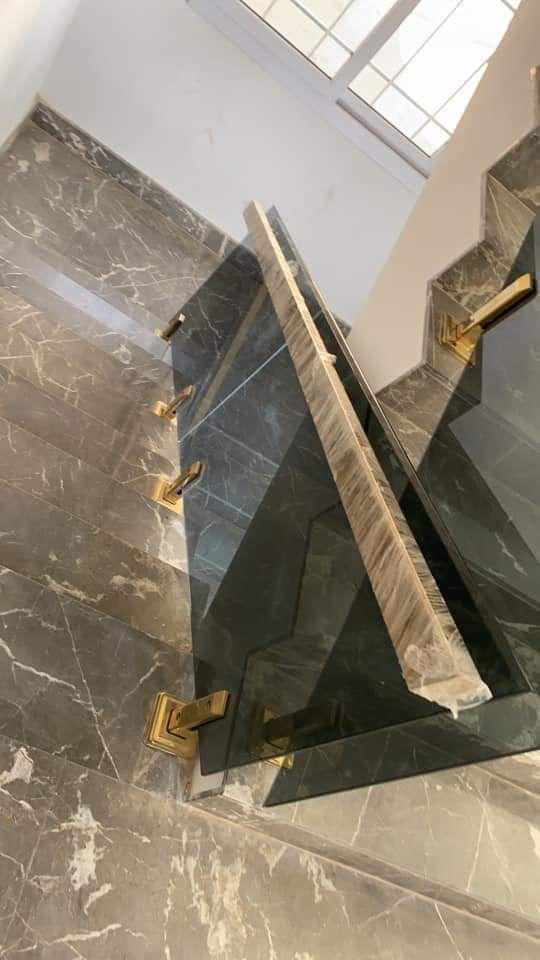
- Villa staircase with a top rail: tempered laminated glass with PVB is usually enough.
- Frameless balcony or stair-void balustrade: tempered laminated glass with SGP.
- Skylight or canopy: laminated glass, with SGP for larger or frameless spans.
- Meeting room or bedroom facing traffic: laminated glass with acoustic PVB.
- Shower screen or decorative bathroom glass: EVA laminated or tempered glass.
Frequently asked questions
Is SGP the same as SentryGlas?
SentryGlas is a well-known brand of ionoplast interlayer. “SGP” is often used as a general name for ionoplast interlayers of this type.
Does laminated glass block UV?
Yes. PVB and EVA interlayers block most UV radiation, which helps protect floors, furniture and fabrics from fading.
Can laminated glass be used in a shower?
Yes. Tempered glass is the usual choice for showers, but where laminated glass is needed, an EVA interlayer handles bathroom humidity well.
Which interlayer is best for sound insulation?
Acoustic PVB, a special interlayer designed to damp sound, gives the best noise reduction among common laminated glass types.
Sources and further reading: Techniques de l’Ingénieur: interlayers for laminated glass · LiSEC: laminating foils · Construction Canada: balcony glazing
Need advice for your project?
Our technical office replies with honest recommendations and an itemised quotation, or visits to measure on site.